If you're not using AI in 2026, you're already behind.
That's not an exaggeration, it's the reality of the current business landscape. Competition across nearly every industry has intensified, and the businesses pulling ahead aren't necessarily the ones with the biggest budgets. They're the ones working smarter. They're the ones using AI.
Think of AI like hiring a 24/7 employee who never calls in sick, never misses a deadline, and costs a fraction of what a full-time staff member would. Whether you're a solo entrepreneur, a law firm managing intake, or a medical practice trying to reach new patients, AI tools are now capable of handling tasks that used to eat up hours of your week, content creation, research, data analysis, customer communication, and more.
The challenge isn't whether to use AI. The challenge is figuring out which AI to use.
Right now, three platforms dominate the conversation: Google's Gemini, OpenAI's ChatGPT, and Anthropic's Claude. Each one has distinct strengths, and choosing the wrong tool for your goals can cost you time and money instead of saving it. In this guide, we're breaking down all three so you can make a confident, informed decision.
Gemini is Google's flagship AI assistant, and it comes with one major advantage that the others can't match: it's baked directly into the Google ecosystem. If your business runs on Google Workspace, Gmail, Docs, Sheets, Drive, Google Search Gemini is designed to work seamlessly alongside all of it.
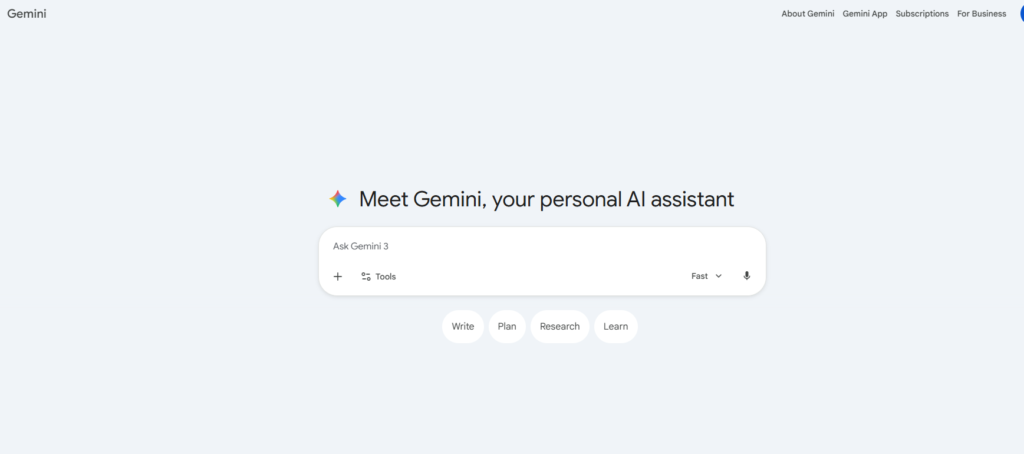
Where Gemini really shines is in real-time data access and research. Unlike some AI models that rely solely on pre-trained knowledge, Gemini can pull current information from the web, making it particularly useful when you need up-to-date market insights, competitor analysis, or industry news. For business owners who live inside Google's suite of tools, Gemini is a natural fit.
ChatGPT, developed by OpenAI, is arguably the most well-known AI tool in the world, and for good reason. It's the most versatile option available, capable of handling everything from writing marketing copy and drafting emails to building automations, generating code, and brainstorming campaign strategies.
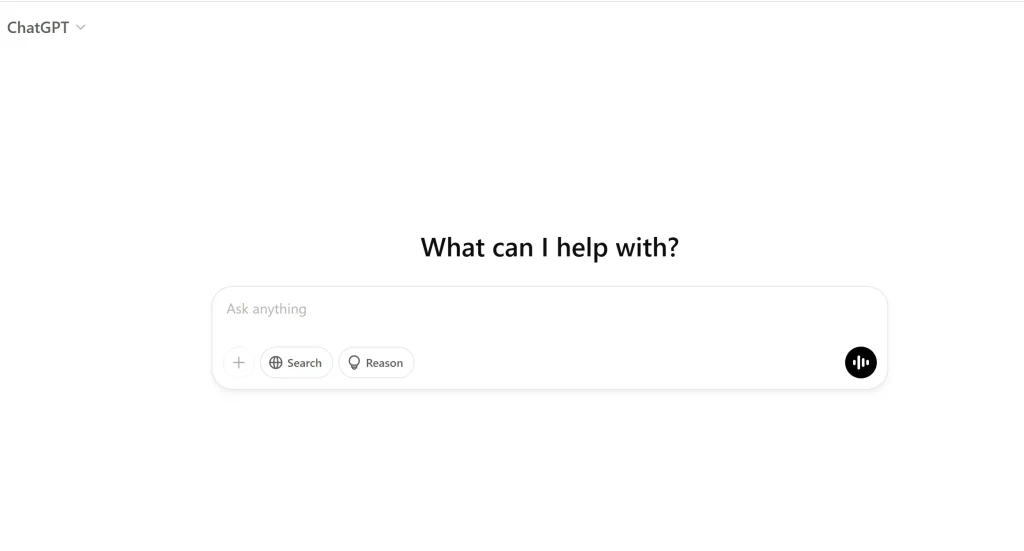
For agencies and business owners who need one tool that can do a little bit of everything, ChatGPT is often the go-to. Its integrations are extensive, it supports a massive plugin ecosystem, and its conversational ability makes it easy to use for non-technical users. If you want a powerful all-rounder, ChatGPT is your answer.
Claude, built by Anthropic, has carved out a reputation for being the most thoughtful and precise of the three. Where ChatGPT leans toward versatility and Gemini leans toward research, Claude leans toward depth, accuracy, and structured reasoning.
This makes Claude particularly valuable for industries where language precision matters, legal writing, medical content, compliance documents, long-form reports, and contracts. Claude is also known for maintaining consistent tone across long pieces of content, which is critical when you're producing high-stakes material that represents your brand or your client's practice.
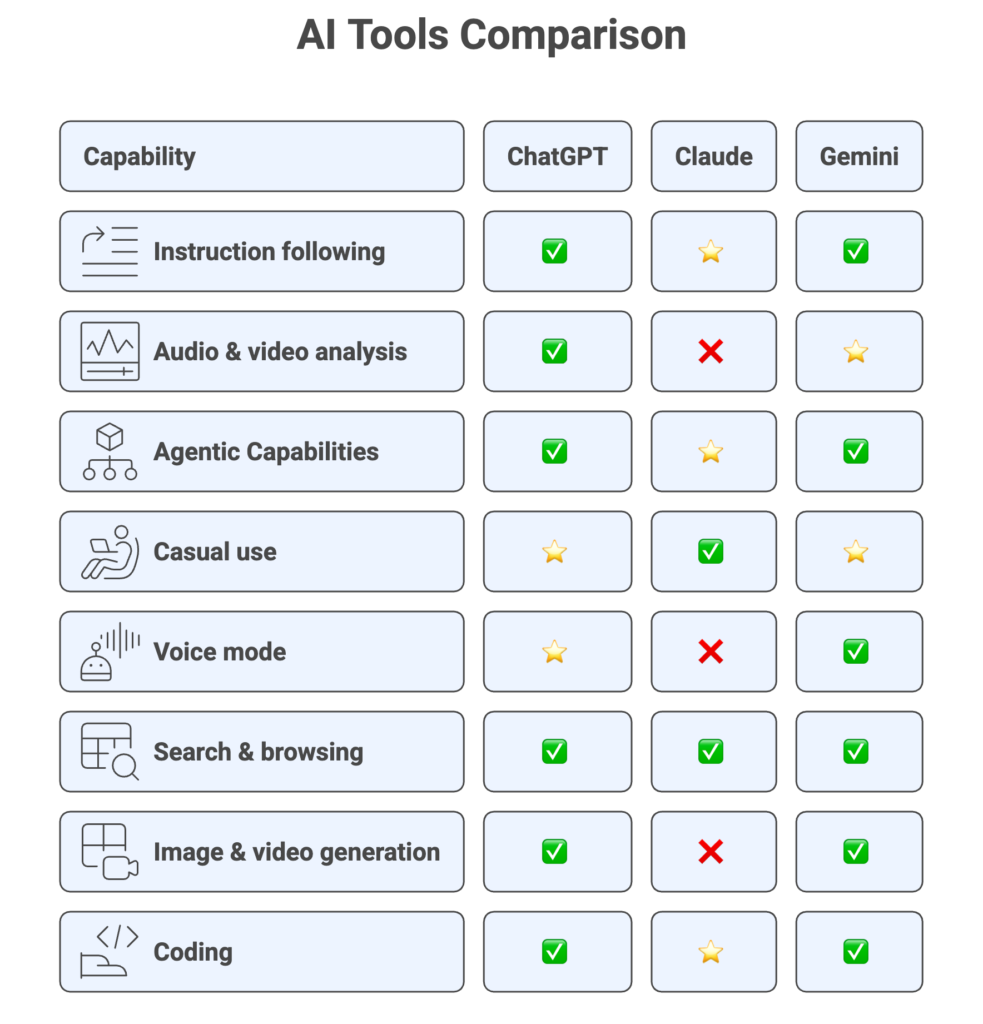
When it comes to generating leads and running marketing campaigns, ChatGPT is the workhorse of the three. Need to write a batch of SEO blog posts for your website? ChatGPT can handle it. Want to draft high-converting Google Ads copy in minutes? Done. Need social media captions tailored to your brand voice for the next two weeks? That too.
Its strength lies in the sheer speed and adaptability of its output. Marketing is a volume game in many respects, you need content, and you need it consistently. ChatGPT delivers quantity and quality, making it the top choice for business owners who want to feed their content pipeline and stay visible online.
If your decision-making depends on current data, Gemini is your best friend. When you're trying to understand what your competitors are doing, what customers are searching for right now, or what's happening in your industry this week, Gemini's real-time search capability gives it a significant edge.
For professionals in fast-moving industries, finance, healthcare policy, tech, this matters enormously. Gemini doesn't just pull from pre-trained data; it actively searches the web to give you relevant, current information. Add in its seamless integration with Google Analytics, Sheets, and Search Console, and you have a research assistant that plugs directly into the tools you're already using.
about colorectal cancer screening, Claude is the tool designed for exactly that type of work.
This one isn't close. For law firms, medical practices, and any business that produces compliance-sensitive or high-stakes written content, Claude is the clear winner.
Legal documents, patient education materials, regulatory summaries, and detailed reports require a level of precision that most AI tools struggle to consistently maintain. Claude's responses tend to be more structured, more accurate, and more careful with language, qualities that matter enormously when your content carries legal or clinical weight.
But don't take our word for it, run the same prompt through both and see what comes back.
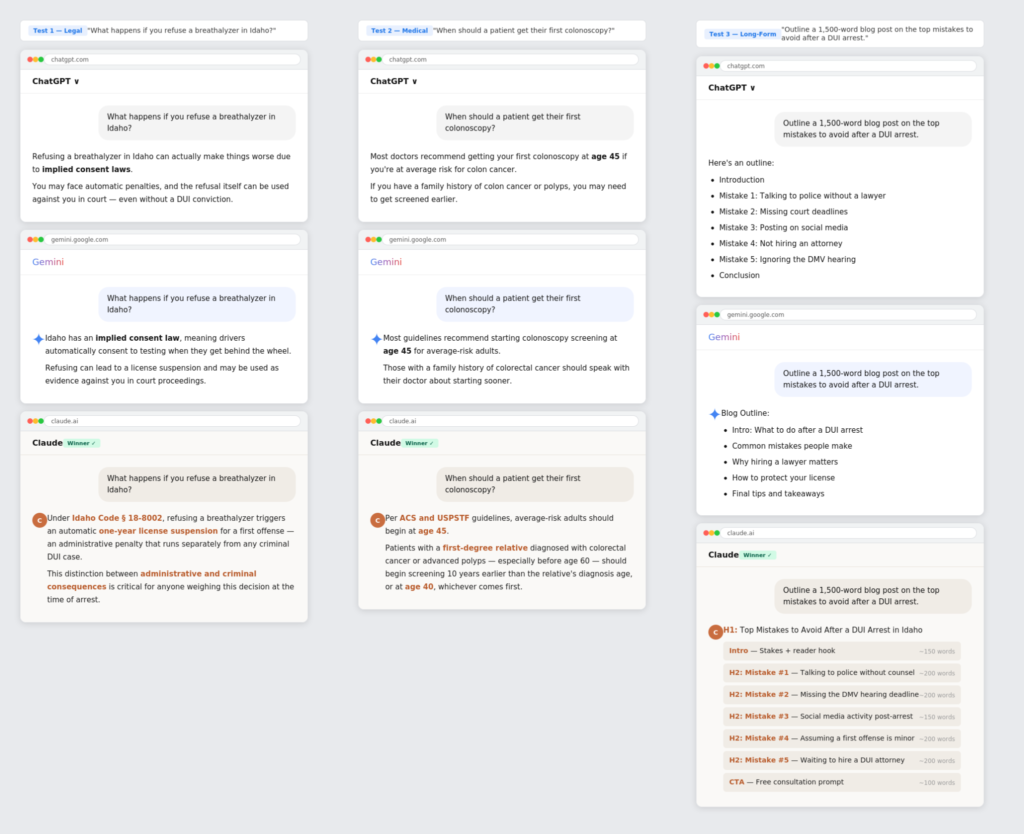
If you're a DUI defense attorney writing educational blogs about Idaho's DUI laws, or a gastroenterology practice creating patient-facing content about colorectal cancer screening, Claude is the tool designed for exactly that type of work, and the output proves it.

Let's get practical. Here's how businesses in different verticals are actually putting these tools to work.
Law firm: A personal injury or DUI defense firm can use Claude to draft blog content that educates potential clients on their legal options, content that's accurate, well-structured, and optimized for search. ChatGPT can then be used to write ad copy and social posts promoting that content, while Gemini helps the team research competitor keywords and local legal market trends.
Medical practice: A gastroenterology clinic can use Claude to write patient education articles on topics like colonoscopy preparation, GERD management, or capsule endoscopy,complex topics that require medical
accuracy and plain-language clarity. ChatGPT can support the practice's broader marketing by drafting appointment reminder emails and social media content, while Gemini assists with researching seasonal health trends and search behavior.
Digital marketing agency: An agency managing multiple clients can use all three tools strategically, ChatGPT for high-volume content production and ad copy, Claude for premium clients in legal and medical verticals who need precision writing, and Gemini for staying on top of platform changes, algorithm updates, and market shifts.
The common thread? Each business is using AI not as a replacement for strategy, but as a force multiplier that lets small teams do the work of much larger ones.
Here's a quick snapshot of where each platform sits on pricing. ChatGPT Plus runs around $20 per month for individual users, with higher-tier business plans available. Gemini Advanced, Google's premium tier, is similarly priced. Claude Pro also sits in the $20/month range for individuals, with team and enterprise options scaling accordingly.
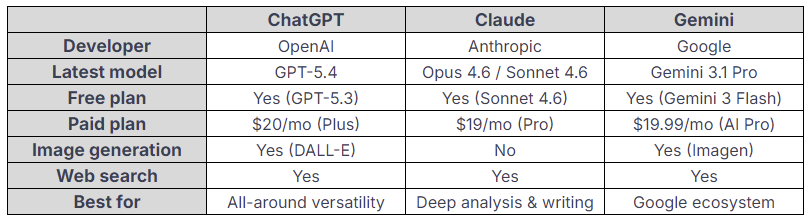
The honest answer is that the cost differences between these platforms are minimal when compared to the value they can generate. A single well-written blog post that ranks on Google and drives client inquiries is worth more than months of subscription fees. A well-crafted Google Ads campaign built with AI assistance can generate leads at a fraction of what traditional methods cost.
The best AI isn't the cheapest, it's the one that makes you the most money. That means the real question isn't "which one is the least expensive?" It's "which one aligns with my specific goals and gives me the best return per dollar spent?"
For most small business owners and professional service firms, the answer is to start with one tool, master it, and then layer in others as your workflow develops.
Here's what the most sophisticated business owners and agencies are doing in 2026: they're not picking just one AI. They're using all three, strategically, with each tool doing what it does best.

Think of it as building a power team. ChatGPT is your executor. It handles content production, campaign copy, email drafts, social posts, and automation workflows. It's fast, flexible, and never runs out of ideas.
Gemini is your researcher. Before you create anything, before you write a blog, launch a campaign, or enter a new market, you run it through Gemini to understand what's actually happening in the world right now. It validates your strategy with real-time data.
Claude is your editor and refiner. Once you have a draft or a plan, you bring Claude in to sharpen the language, ensure accuracy, improve structure, and make sure the final product meets a high standard. For legal briefs, medical content, or any high-stakes writing, Claude is the final checkpoint before publication.
When you stack these three tools together with a clear workflow, you've built something most of your competitors don't have: a content and marketing engine that operates with the speed of a machine and the judgment of a seasoned team.
A lot of business owners get burned when adopting AI,not because the tools don't work, but because they approach them the wrong way. Here are the most common pitfalls to avoid.
The first mistake is choosing based on hype. ChatGPT is everywhere, so some business owners default to it without considering whether it's actually the right tool for their specific goals. Hype-driven decisions lead to underutilization and frustration.
The second mistake is not aligning the tool with business goals. Before you subscribe to anything, ask yourself: what specifically am I trying to accomplish? Generate more leads? Rank higher on Google? Produce better client deliverables? Your goal determines your tool, not the other way around.
The third mistake is treating AI as a vending machine. You put in a vague request, expect a perfect result, and then get disappointed. AI tools require intentional prompting. The better you learn to communicate your goals, tone, audience, and constraints to these tools, the better your outputs will be. Businesses that invest time in learning how to use AI properly get dramatically better results than those who don't.
There is no single “best” AI tool, only the tool that fits your specific business needs. Here’s a practical way to decide:
The smartest approach is to think in terms of workflow, not a single tool. Use each AI for what it does best, combine them strategically, and you’ll multiply your team’s efficiency and output.
Choosing the right AI is just step one. The real question is, how do you use it to generate leads, rank on Google, and scale your business?
At Panzi Digital Agency, we help law firms, medical practices, and growth-focused businesses implement AI-powered marketing strategies that drive real, measurable results. From Google Ads and Local Service Ads to SEO content and AI automation, we build systems that work while you focus on running your business.
Ready to see what's possible? Book your free session today and let's build a roadmap for growth that's built around tools, data, and a strategy tailored to your goals.

A dependable and detail-oriented professional, Fiona excels at managing digital projects and ensuring outstanding client experiences. Skilled at coordinating tasks, streamlining workflows, and solving challenges efficiently, she thrives in dynamic environments where precision and client satisfaction are key. At Panzi Digital Agency, Fiona ensures projects run smoothly from start to finish, helping clients achieve their goals through effective and seamless digital solutions.