It started with a burger. It ended with a business lesson no MBA program could have scripted.
Here's the thing, this video didn't blow up overnight. It actually sat completely ignored for three weeks. And that detail alone makes the story so much better.
On February 3rd, 2026, McDonald's CEO Chris Kempczinski quietly posted an Instagram video promoting the chain's brand new Big Arch burger. Clean office. Good lighting. $23 billion company behind him. Everything was set up perfectly.
Then he called it a product.
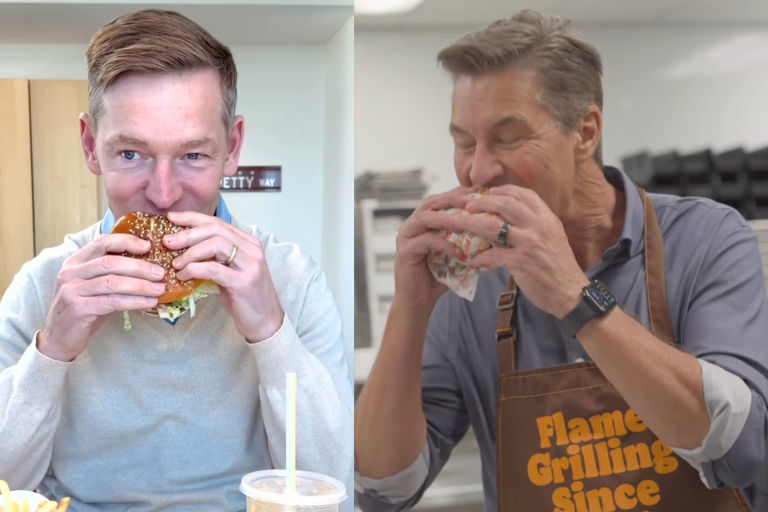
Not a burger. Not a meal. Not "oh my God, you have to try this." He said product. Four times. Then took a bite so microscopic the internet would later genuinely question whether the man had ever eaten fast food in his life.
But here's the twist, nobody noticed. Not yet.
The video sat completely untouched on his account for three full weeks. No memes. No comments. No controversy. Just a CEO and his tiny bite, floating quietly in the internet's blind spot.
Then on February 25th, Irish comedian Garron Noone stumbled across it on TikTok, hit record on his reaction, and said seven words that changed everything.
"This is probably the funniest thing I've ever seen in my life."
That's when it went viral. Within 48 hours it was everywhere, and by early March, just last week, the comments were pouring in and they were merciless.
"That was the smallest first bite I've ever seen." "He's acting like he's afraid of it." "This man doesn't even eat McDonald's."
And that's when the real chaos started.
A video posted on February 3rd. Ignored for three weeks. Then one comedian hit a record, and within 48 hours, the entire internet had an opinion. That's how fast your brand's story can be written for you, by someone else, when you're not paying attention.
Before we get into the lessons, here's how big this actually got:
While McDonald's was trending for all the wrong reasons, Burger King made their move.
Their President, Tom Curtis, posted a TikTok of himself eating the newly revamped Whopper. No script. No corporate language. No cautious nibbling. He picked up the burger and ate it, full jaw, real bite, completely unbothered.
The internet lost its mind.
People weren't just laughing anymore. They were debating authenticity. Comparing body language. Analyzing two executives like film characters. And they had already decided who won.
The term "burgermogging" was born, meaning Burger King's CEO outclassed, outcharmed, and out-humanized McDonald's CEO simply by acting like a normal person who enjoys food. Burger King's social team ran with it, declaring Kempczinski had been "bitemogged AND flavormaxxed." Wendy's posted a video. KFC posted a video. A&W Canada dropped the sharpest parody of them all.
The entire fast food industry was eating on camera like it was a competitive sport.
Here's where most brands would have gone quiet, deleted the video, issued a statement, and waited for the news cycle to die.
McDonald's did the opposite.
Their official Twitter account posted a photo of the Big Arch with one caption:
"Take a bite of our new product. Can't believe this got approved."
They publicly roasted their own CEO. Used the exact phrase that had become the meme. Winked directly at the internet. And in doing so, flipped a PR disaster into millions of dollars worth of organic attention.
The Big Arch went from "the burger the CEO was afraid to eat" to a trending topic every food fan in America suddenly wanted to try. One tweet. One moment of self-awareness. The entire story changed direction.
Here's the truth hiding underneath all the memes and the commentary.
What went viral wasn't a burger. It wasn't even a bad marketing video. What went viral was a feeling, the feeling every person gets when they watch someone perform instead of just being real. When the script is showing. When the enthusiasm is clearly borrowed from a memo. When you can tell in five seconds flat that the person talking doesn't actually believe what they're saying.
Audiences feel that. And in 2026, they don't just feel it and move on, they post about it.
The research backs this up completely:
People are not making decisions based on your logo or your tagline. They are making decisions based on whether they trust you, and that trust is built or broken in the smallest, most human moments.
The scariest part? Most businesses are doing exactly what Kempczinski did, showing up stiff, scripted, and disconnected, and they have no idea. Because unlike McDonald's, nobody's making a viral video about it. The clients are just quietly leaving and choosing someone else.
You're not selling burgers. You're selling legal expertise, medical care, financial guidance, or a service that requires someone to hand over genuine trust before they ever write a check.
That raises the stakes, it doesn't lower them.
Your potential clients land on your website, your Google profile, your social media, and within seconds, without realizing it, they're asking themselves three questions:
Does this person actually believe in what they do? Do they actually care about people like me? Is any of this real?
If the answer feels like no, they don't argue with themselves. They just leave. Quietly, permanently, and without ever telling you why.
Consider where you might be losing them right now:
Every one of these touchpoints is a moment where someone decides whether to trust you or keep scrolling.
Tom Curtis didn't hire an agency or workshop his delivery. He just showed up real. And underneath that simple moment, three things were working in his favor, all of which any business can apply starting today.
1. He believed in what he was holding. Confidence is visible. It reads through a screen, through a paragraph of copy, through the way you respond to a review. If you genuinely believe your service is exceptional, that conviction shows up everywhere. And if you don't? Your audience will feel that too, long before they can explain why.
2. He let the product speak. He didn't over-explain. He didn't pile on adjectives. The best marketing isn't a list of reasons to trust you, it's a demonstration of what trust actually looks like. Real client results. Specific outcomes. Honest reviews. Show it, don't just say it.
3. He wasn't trying to go viral. And that's exactly why it worked. The most shareable content right now is almost never the content engineered to be shared. It's the post that was genuinely human. The video where someone was just honest. The review response that was actually personal. That's what people send to each other.
The Big Arch is selling. "Burgermogging" is in the cultural lexicon. Tom Curtis is somewhere happily eating a Whopper. And Chris Kempczinski is still the CEO of a $23 billion company, probably having a completely normal Thursday.
But what this story left behind for every business owner paying attention is this:
Your clients don't hire your logo. They don't retain your brand colors. They hire you. They trust you. They refer you.
And the gap between the business that wins that trust and the one that loses it, in 2026, is almost never price. Almost never location. Almost never even experience.
It's whether you showed up as real.
Take the big bite.
Panzi Digital Agency is a full-service digital marketing agency helping law firms, medical practices, and businesses nationwide build online presences that earn trust before anyone picks up the phone. If your digital presence has been taking tiny bites, let's change that.

A dependable and detail-oriented professional, Fiona excels at managing digital projects and ensuring outstanding client experiences. Skilled at coordinating tasks, streamlining workflows, and solving challenges efficiently, she thrives in dynamic environments where precision and client satisfaction are key. At Panzi Digital Agency, Fiona ensures projects run smoothly from start to finish, helping clients achieve their goals through effective and seamless digital solutions.