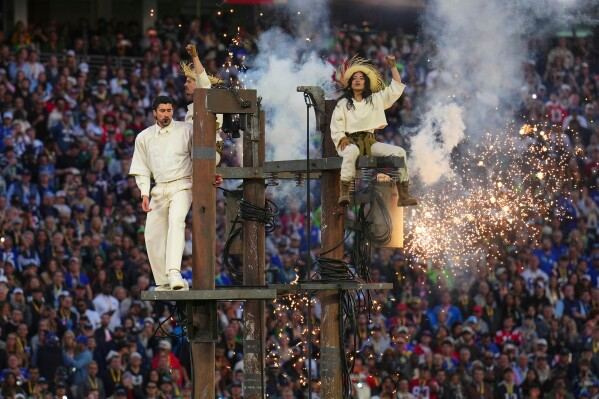
Sunday night, 120 million Americans did something increasingly rare in 2026: they all watched the same thing at the same time.
The Seattle Seahawks dismantled the New England Patriots 29-13 in a defensive showcase that had Sam Darnold managing the game while his defense collected six sacks and two interceptions. But the real story wasn't Drake Maye's struggles or Seattle's suffocating pass rush.
It was that for three and a half hours, America had a shared cultural moment in an era where shared cultural moments have essentially gone extinct.
And if you're running a business, that matters more than you think.
Here's the paradox that should make every business owner pause: The Super Bowl just posted record viewership in the most fragmented media landscape in human history.
Think about it. Your teenage daughter is on TikTok. Your business partner watches YouTube. Your spouse streams Netflix. Your parents have cable but only watch three channels. Nobody you know can name a single show that "everyone" is watching.
Except one Sunday in February.
The Super Bowl has become the last true appointment viewing event, not because we're all football fanatics, but because it's the last thing on the calendar we know everyone else will be watching too. It's not just a game. It's a reference point. A conversation starter. A cultural reset button. The marketing lesson? Your customers are desperate for moments that feel collective, communal, and worth their attention.
Super Bowl ads in 2026 cost north of $7 million for 30 seconds. Some brands spent that. Some got incredible ROI. Others might as well have burned the money.
The winners this year had something in common: they understood that expensive airtime isn't the same as attention.
The QR codes were everywhere. The celebrity cameos were predictable. The humor fell flat half the time. But a few brands did something brilliant, they created a continuation, not just commercials.
One major brand ran a 15-second teaser during the first quarter with a QR code that led to an interactive experience. By halftime, 2.3 million people had scanned it. That's not a commercial. That's a conversion funnel disguised as entertainment.
Another used the Super Bowl as a launch pad for a 30-day social media campaign that started the moment the ad aired. The commercial wasn't the end,it was the beginning. The marketing lesson? The "big moment" only matters if you have a plan for the moment after.

Let's be honest: you're not spending $7 million on a TV commercial. Neither am I. Neither are 99.9% of businesses. But here's what you do have that Super Bowl advertisers would kill for:
Nike has to make an ad that appeals to everyone from 8-year-olds to 80-year-olds. You? You're trying to reach homeowners who need roofing repairs in Atlanta. E-commerce shoppers looking for sustainable products. B2B decision-makers researching software solutions. People who just Googled your service at 11 PM on a Tuesday.
Super Bowl ads are broadcast. Your marketing is precision-guided.
And in 2026, precision beats reach almost every single time.
Seattle's defense showed up from the opening snap. Six sacks. Two picks. Relentless pressure from minute one.
Your marketing needs the same intensity. When someone lands on your website, your Google Business Profile, or your social media page, you have roughly three seconds before they bounce.
Is your headline a gut-punch or a snoozefest? Does your first image grab attention or blend into the background? Would you stop scrolling if you saw your own ad?
The Super Bowl commercials that worked grabbed you in the first three seconds. Everything else was noise.
The best ads this year weren't the most expensive-looking ones. They were the ones that felt real.
Real customer stories beat scripted testimonials every time. A grainy iPhone video of an actual customer explaining how your product changed their business will outperform a $5,000 produced commercial 10 times out of 10.
Your five-star Google reviews? Those are your Super Bowl ads. Screenshot them. Share them. Let your customers do the talking.
User-generated content, behind-the-scenes footage, founder stories, these connect because they're authentic. Polish is overrated. Realness is priceless.
During the game, 73% of viewers had their phone in their hand. They were tweeting, texting, looking up the actors in commercials, and searching for products they just saw advertised.
The brands that won weren't just on TV, they were on Instagram, Twitter, TikTok, and had their website ready for the traffic surge.
You need the same multi-platform presence. When someone sees your Google Ad, they're going to check your website. They're going to look at your reviews. They're going to scroll your Instagram. They might ask their network if they've heard of you. Every touchpoint needs to reinforce the same message: you're the right choice.
You don't need the actual Super Bowl to create a moment worth your customer's full attention.
For an e-commerce brand, that moment is when someone's scrolling at midnight and sees the perfect product. For a B2B company, it's when a decision-maker finally admits they need a solution and starts researching. For a local service business, it's when someone's AC breaks in July and they're desperately Googling for help.
These are your Super Bowl moments. And if you're not showing up with the same intensity as a $7 million ad campaign, you're leaving money on the table.
Make sure your website loads in under two seconds. Make sure your customer service responds fast. Make sure your checkout process is frictionless. Treat every single inquiry like you paid $7 million to get it.
The Patriots' defensive coordinator is getting destroyed on social media today for allowing six sacks and two picks. Why? Because football is a game of stats, and the stats don't lie.
Your marketing needs the same level of accountability.
How many people clicked your ad? How many converted? What's your cost per acquisition? Your ROI by channel? Which campaigns actually drive revenue?
If you can't answer those questions, you're not marketing, you're gambling.
Here's the irony: The Super Bowl is the last bastion of broadcast advertising in a world that's moved to precision targeting.
And that's exactly why it still works.
But for your business? The future isn't broadcast. It's:
A small business with a $3,000/month ad budget and smart targeting can get better ROI than a Super Bowl commercial. I've seen it happen dozens of times.

Stop thinking about marketing in terms of "campaigns we'll launch later." The Super Bowl advertisers didn't wait. They showed up when the moment mattered.
Here's what you should do this week:
Monday: Pull up your website and Google Business Profile. Look at them with fresh eyes. Would you buy from you based on what you see?
Tuesday: Check your response time across all channels. Email, social media, contact forms. If you're taking more than a few hours, you're losing deals to competitors who respond faster.
Wednesday: Read your last 20 customer reviews. Screenshot the best three. Post them on social media. Real testimonials are marketing gold.
Thursday: Google your business name. Look at everything that comes up. Your website, your reviews, your social media. What story does it tell? Is it the story you want to tell?
Friday: Set up conversion tracking if you haven't already. You need to know what's working and what's wasting money.
The 2026 Super Bowl reminded us that attention is still capturable. Even in 2026, with infinite streaming options and endless digital distractions, 120 million people can still come together for the right moment.
Your job isn't to create a Super Bowl moment for millions.
It's to create a Super Bowl-quality moment for the one person searching for your services right now.
That person researching solutions at midnight. That business owner is finally ready to invest in growth. That customer whose problem just became urgent.
They're not looking for the biggest brand. They're looking for the right answer at the right moment.
And if you show up with the same intensity, authenticity, and precision that the best Super Bowl advertisers bring, you'll win every time.
Want to create "Super Bowl moments" for your business every single day? At Panzi Digital Agency, we help businesses across industries show up when it matters most, with Google Ads, Local Service Ads, SEO, social media marketing, and websites that convert. Let's talk about making your next customer inquiry feel like you paid $7 million to get it.

A dependable and detail-oriented professional, Fiona excels at managing digital projects and ensuring outstanding client experiences. Skilled at coordinating tasks, streamlining workflows, and solving challenges efficiently, she thrives in dynamic environments where precision and client satisfaction are key. At Panzi Digital Agency, Fiona ensures projects run smoothly from start to finish, helping clients achieve their goals through effective and seamless digital solutions.